


The Game Changer — pro‑grade control, modular by design


| Quantity | Discount | Unit price | |||
|---|---|---|---|---|---|
| 1 | -0% | $189.00 | |||
| 5+ | -11% | $169.00 | |||
| I need way more than that! | |||||
This product ships from European Union, beautiful country - Lithuania. Import duties might apply depending on your country. Price shown excludes VAT.
 CE marking
 Made in Europe
 Lithuania
- Enjoy free delivery for orders over $500.00!
- For orders below $500.00, a delivery fee of $20.00 - $50.00 applies.
- We deliver your orders with express courier services to ensure you get your products as soon as possible.
- All orders are shipped from EU, Lithuania.
General specs
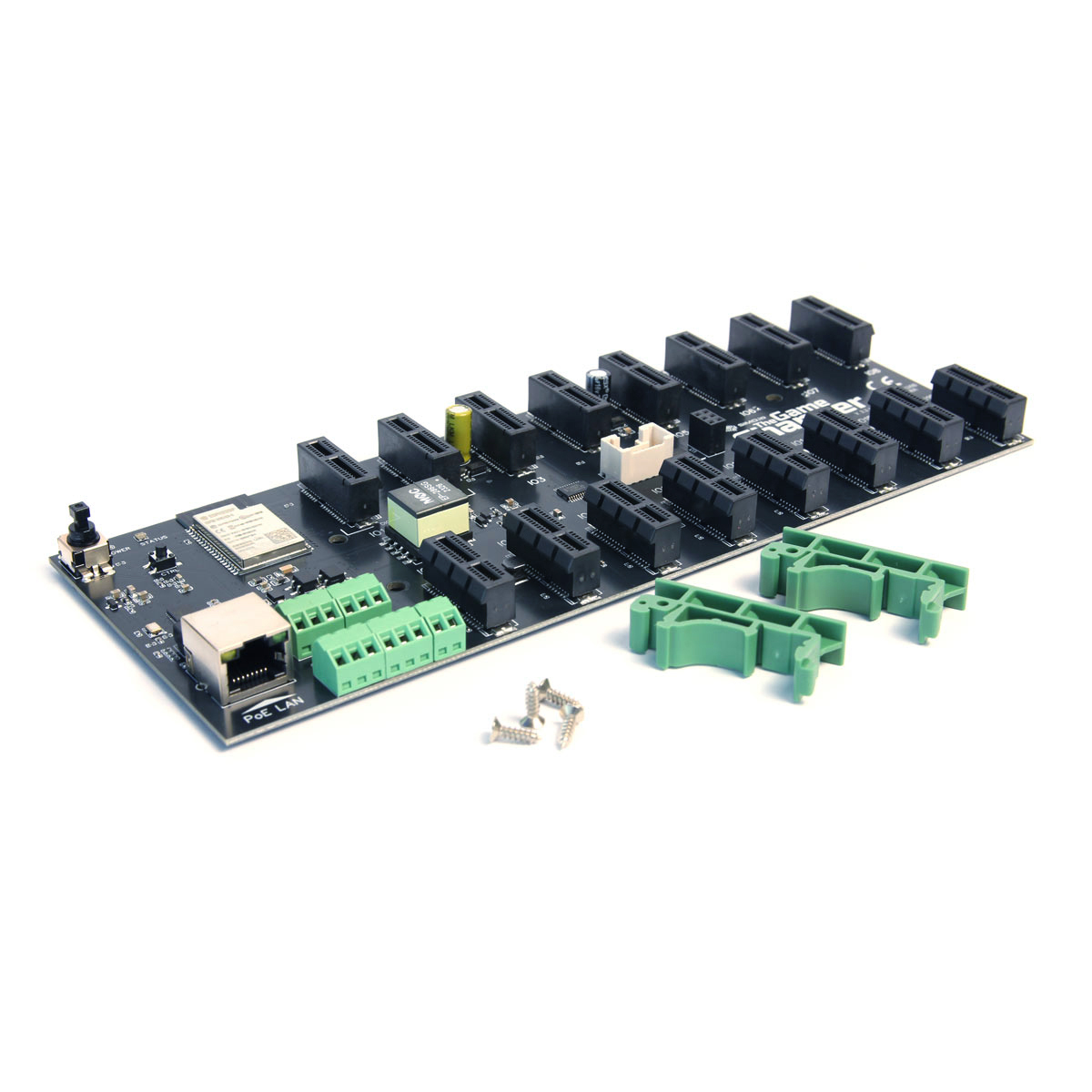
- Connectivity: LAN, WiFi, Bluetooth
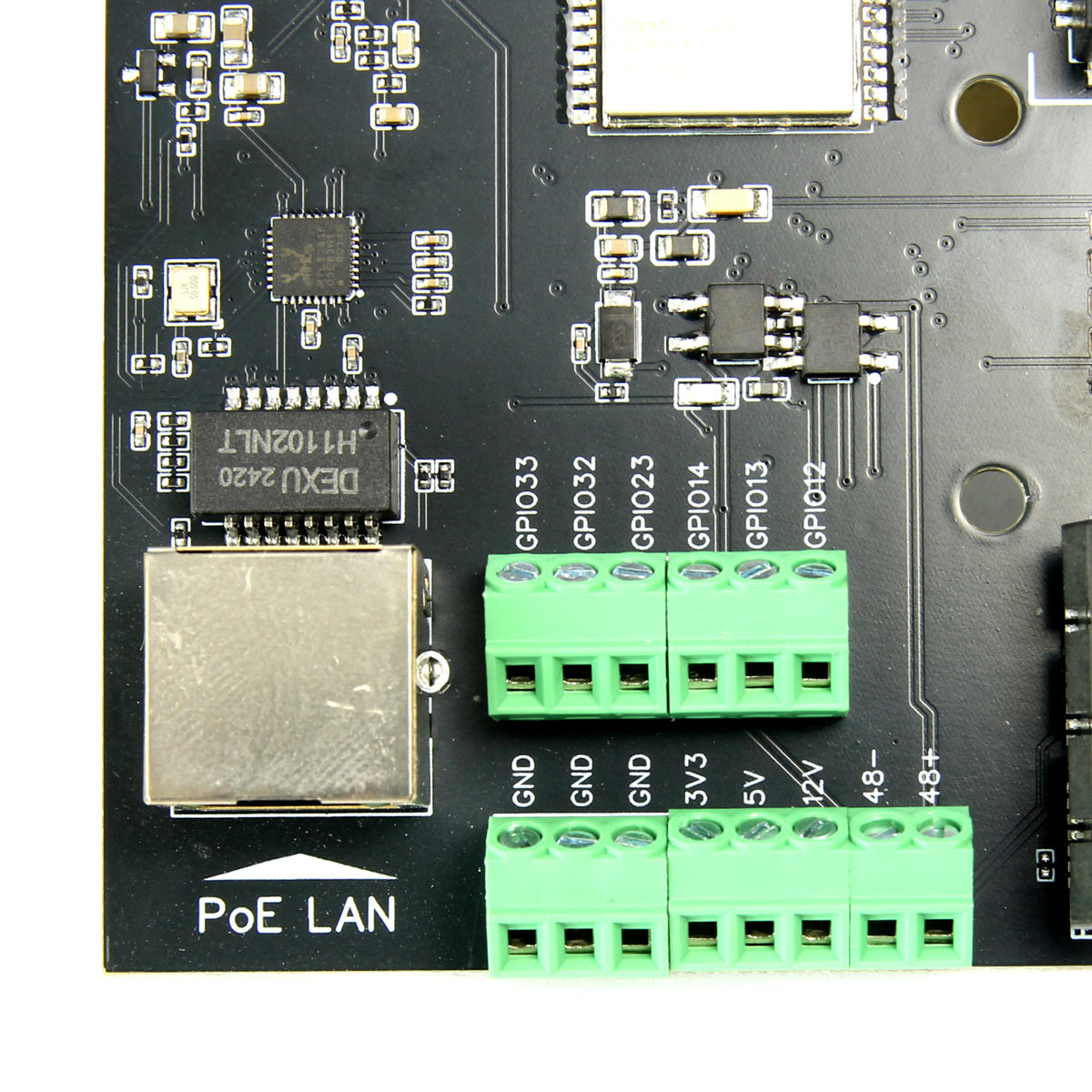
- Power: PoE, 12V
- IO Ports: 16
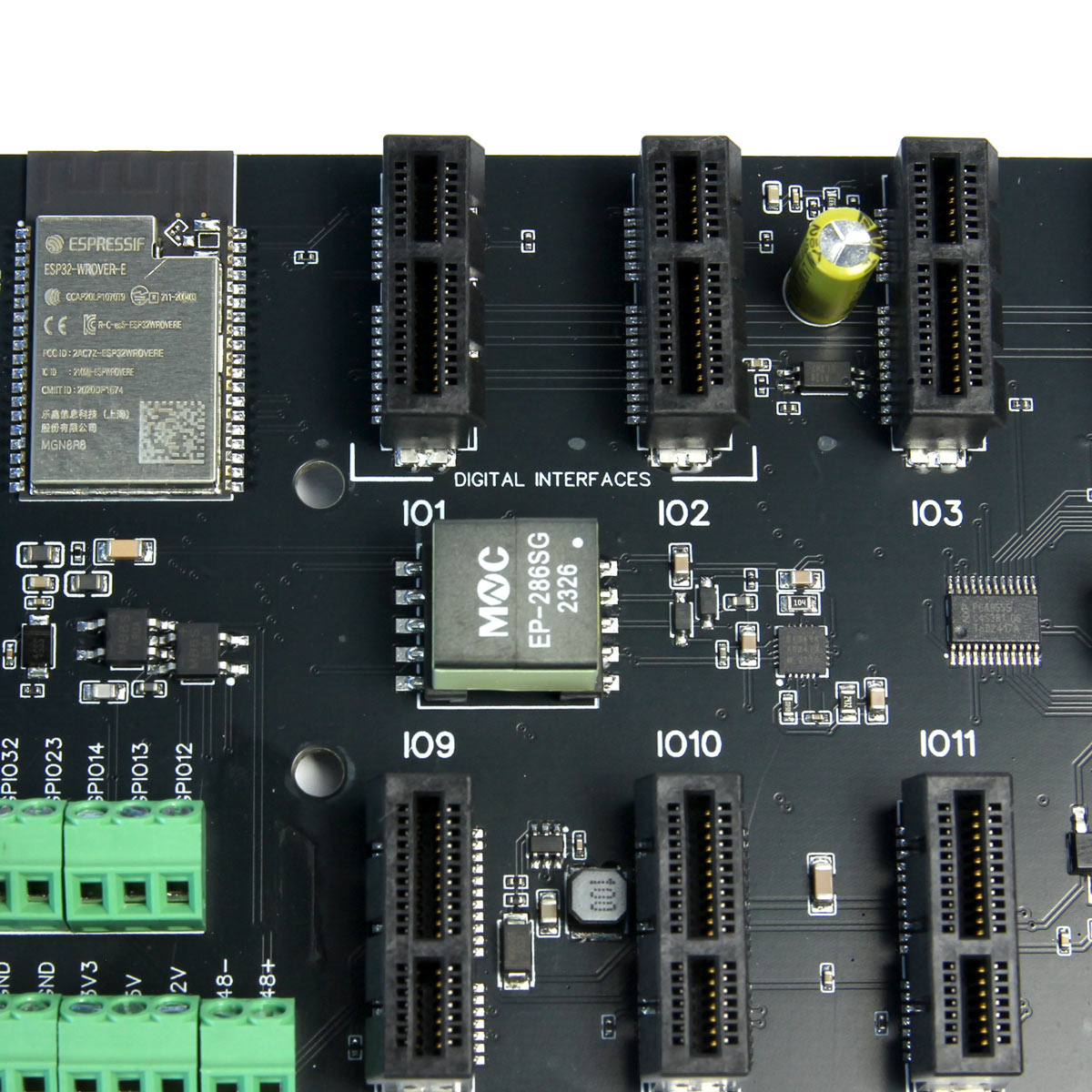
- Digital Interfaces: 2
- Mount: DIN Rail
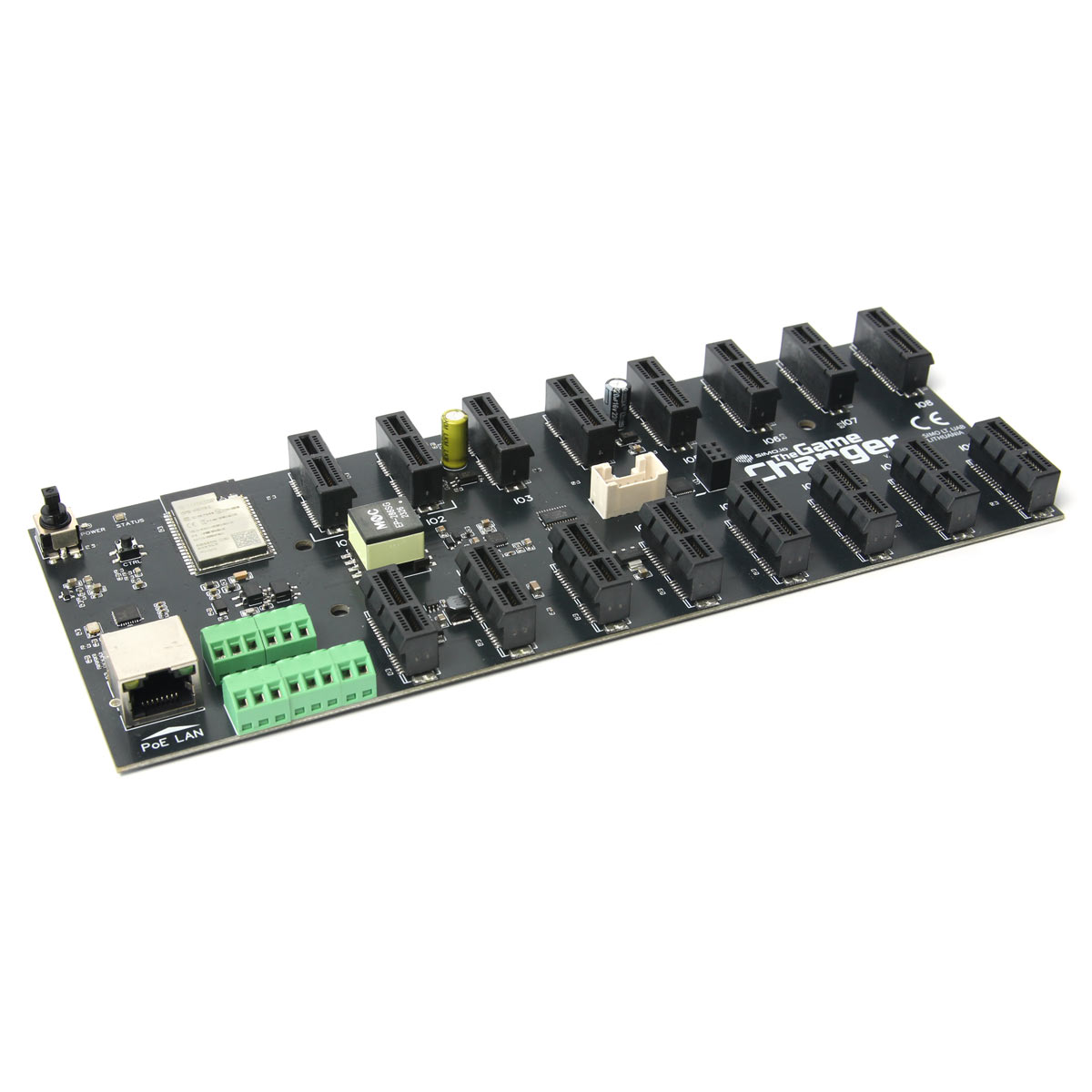
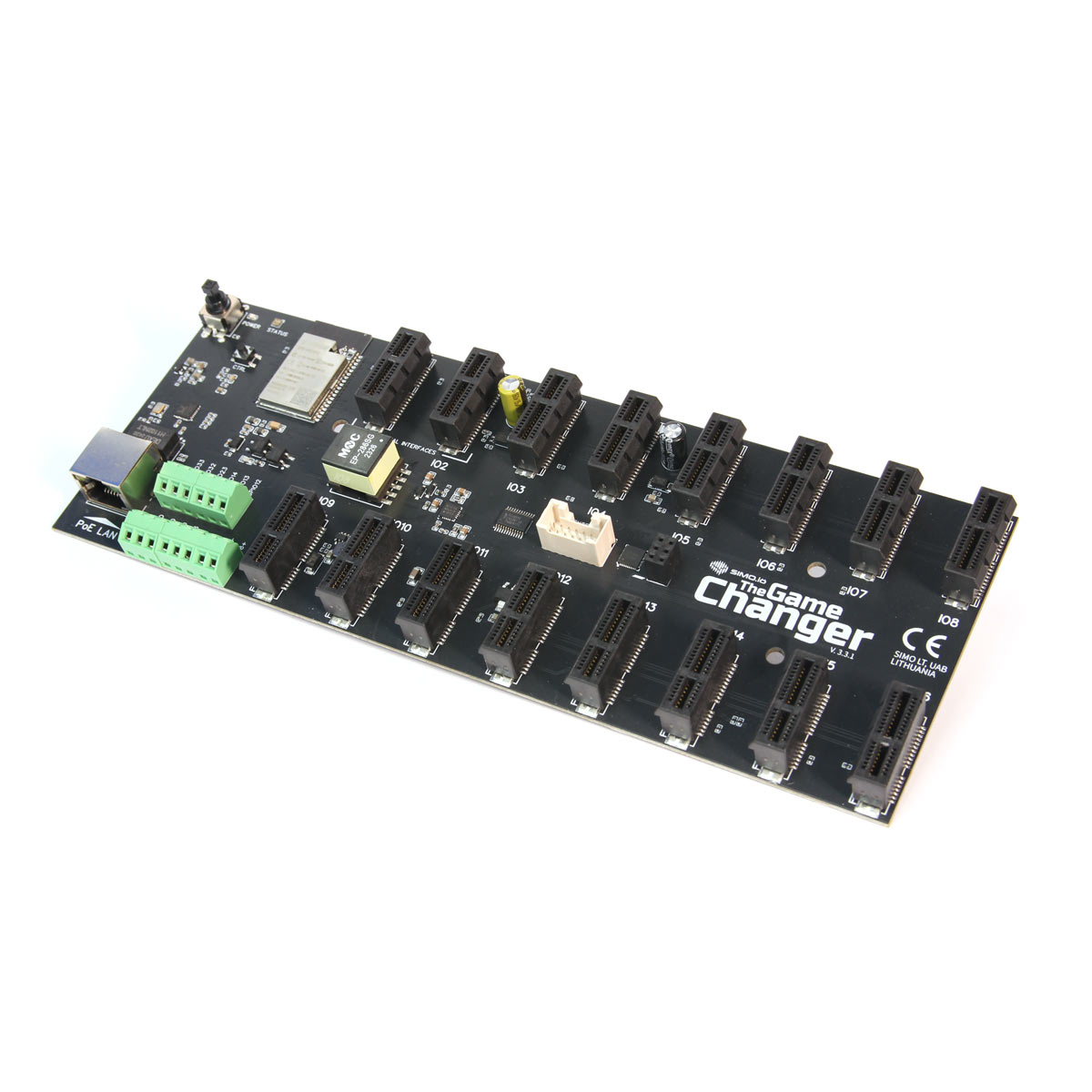
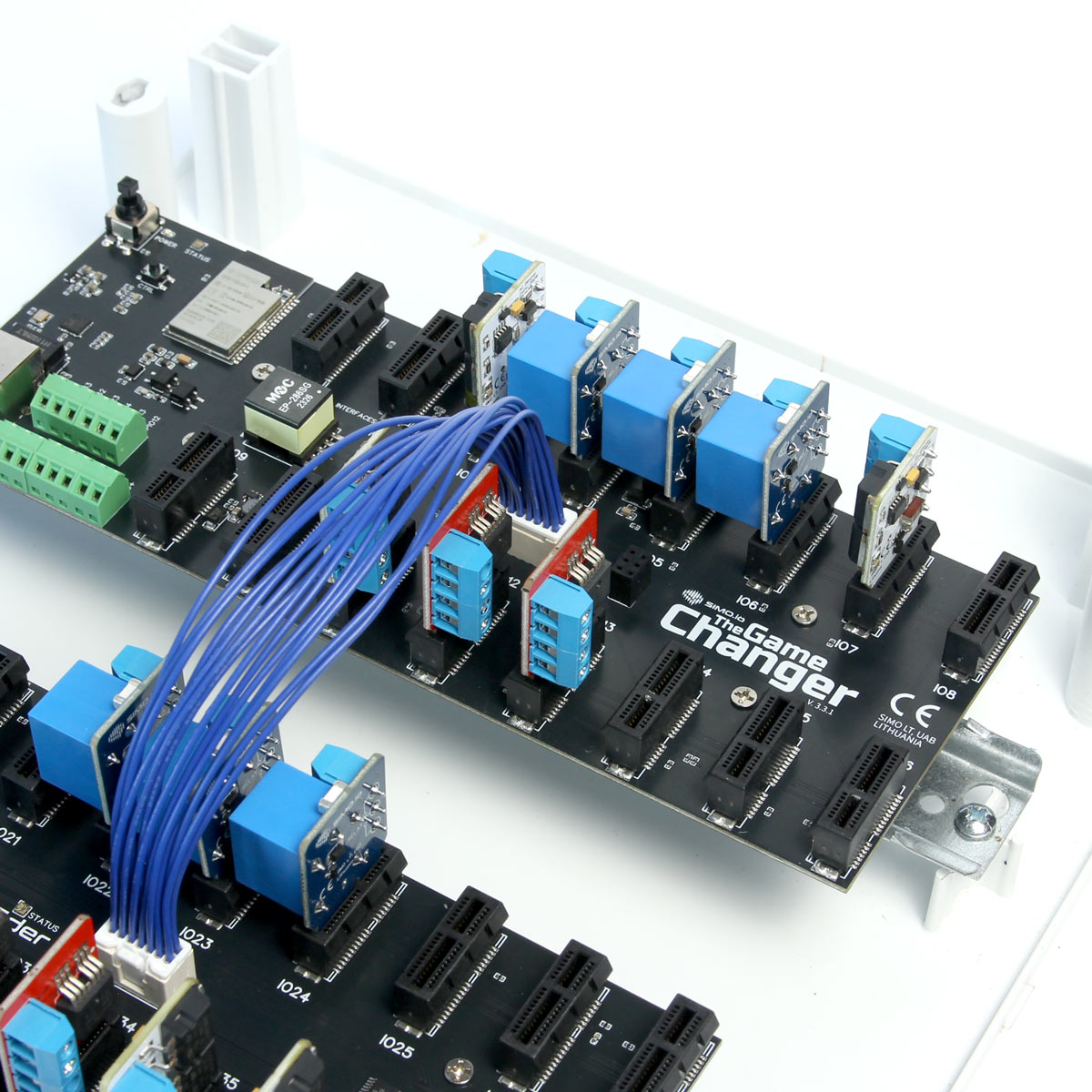
The Game Changer is the DIN‑rail main board of SIMO.io wired installations. It commits to SIMO.io Smart Home Supremacy—serving with discipline, precision, and inevitability. Wire once, snap in modules, scale on demand, and keep control centralized where it belongs.
SIMO.io is not here to compete. SIMO.io is here to redefine the industry—replacing fragile, consumer‑grade frustration with a plug‑and‑play platform that simply does its job.
Runs through outages
PoE power + Ethernet. Put your router, SIMO.io hub, and boards on a UPS—your home keeps working when the grid doesn’t.
Modular I/O at scale
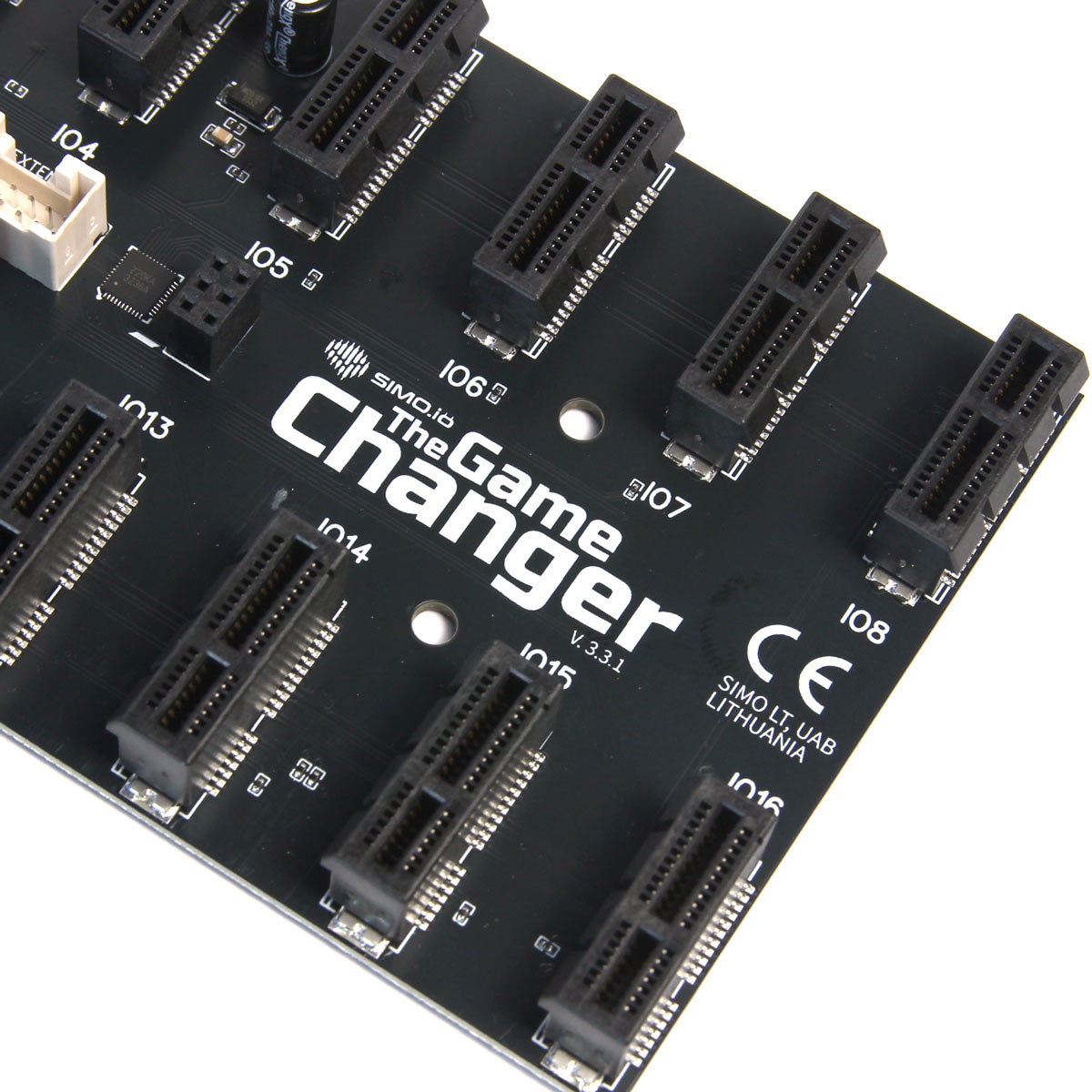
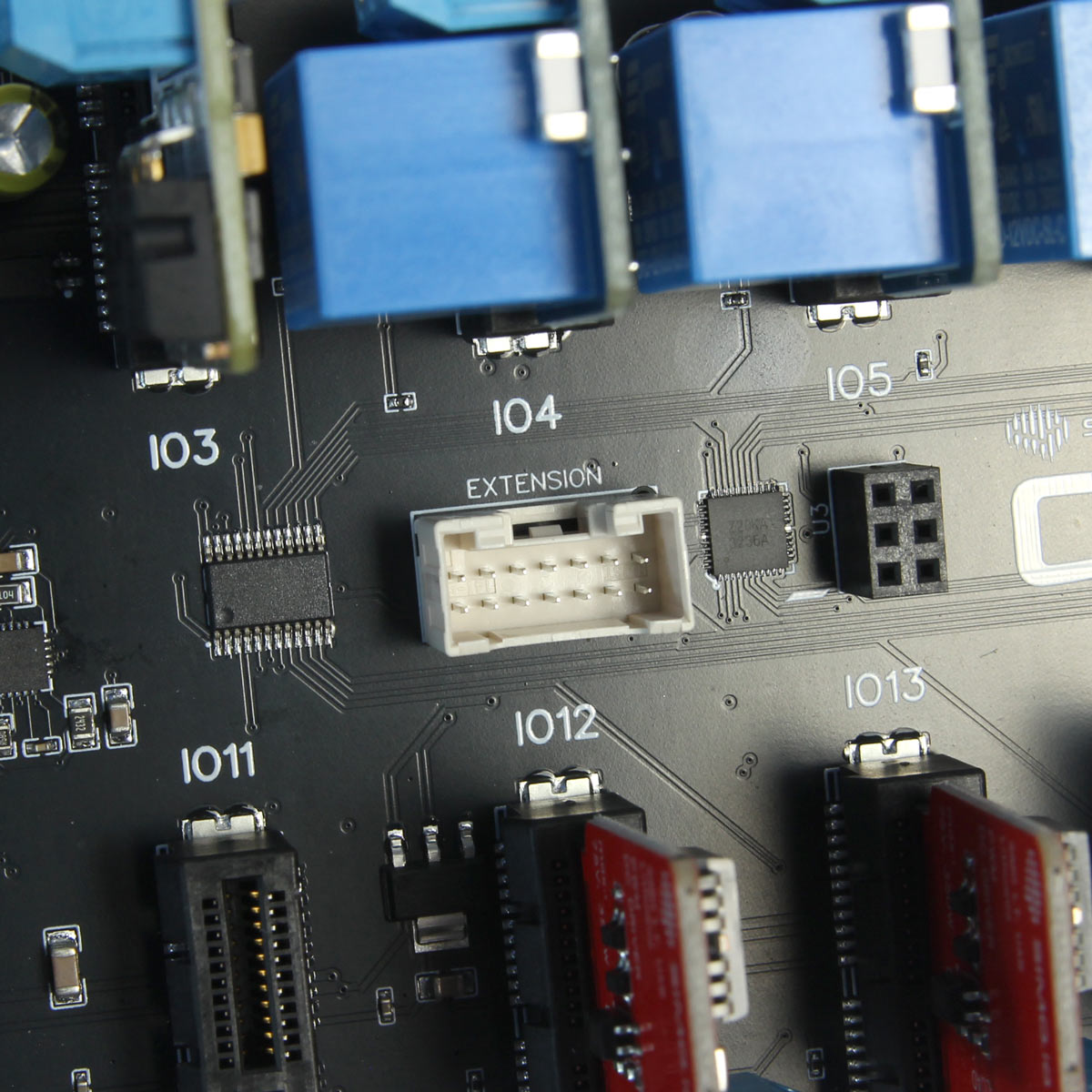
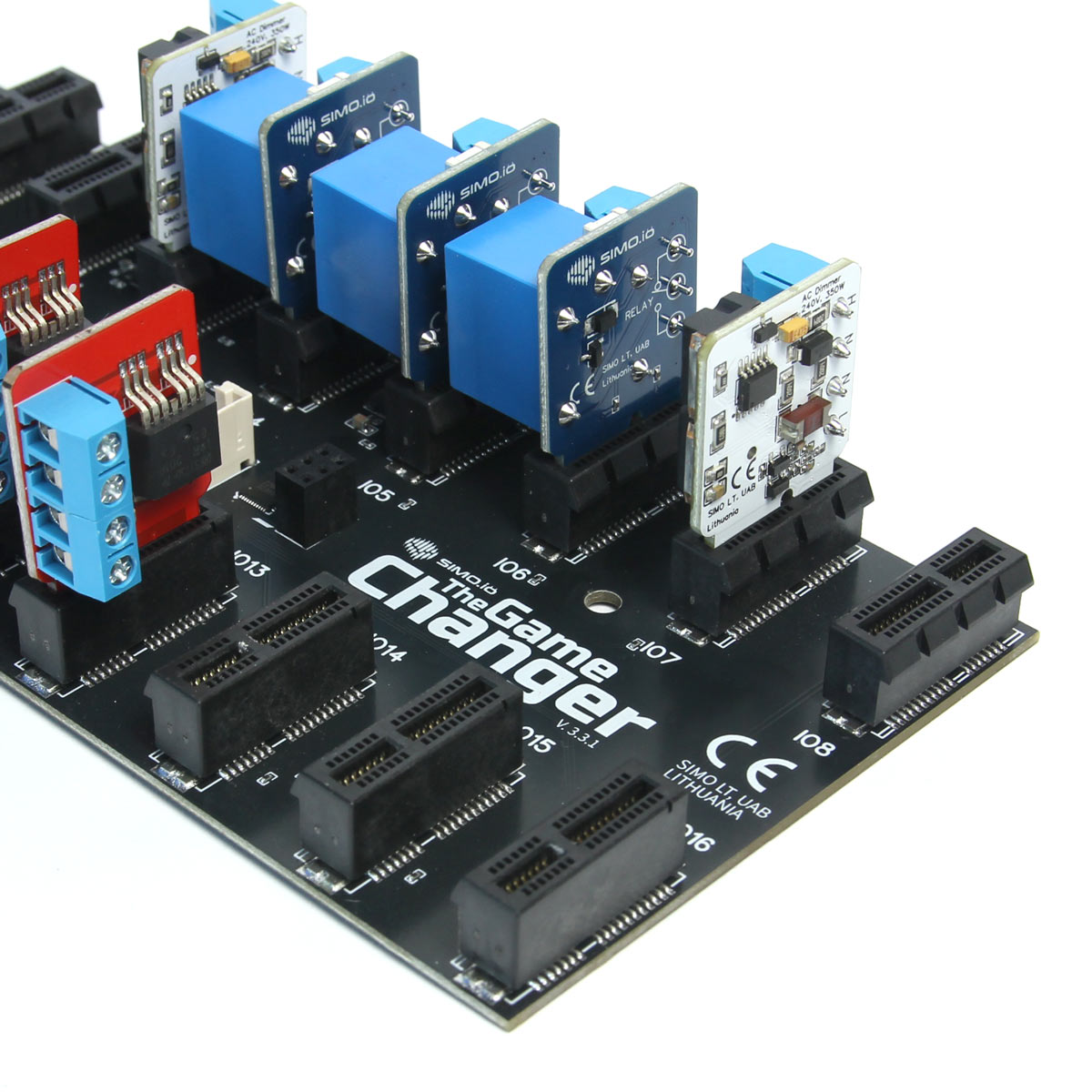
16 PCIe‑style ports for relays, dimmers, sensors; add an extension for 22 more when projects grow.
Logical centers
All I/O in one place. Use 2–4 panels across a typical home for short runs and fast service.
3× I/O density
About three times more inputs/outputs per rail segment than typical DIN solutions.
Digital buses onboard
IO1/IO2 support DALI and I2C modules for modern lighting and sensor networks.
Developer‑friendly
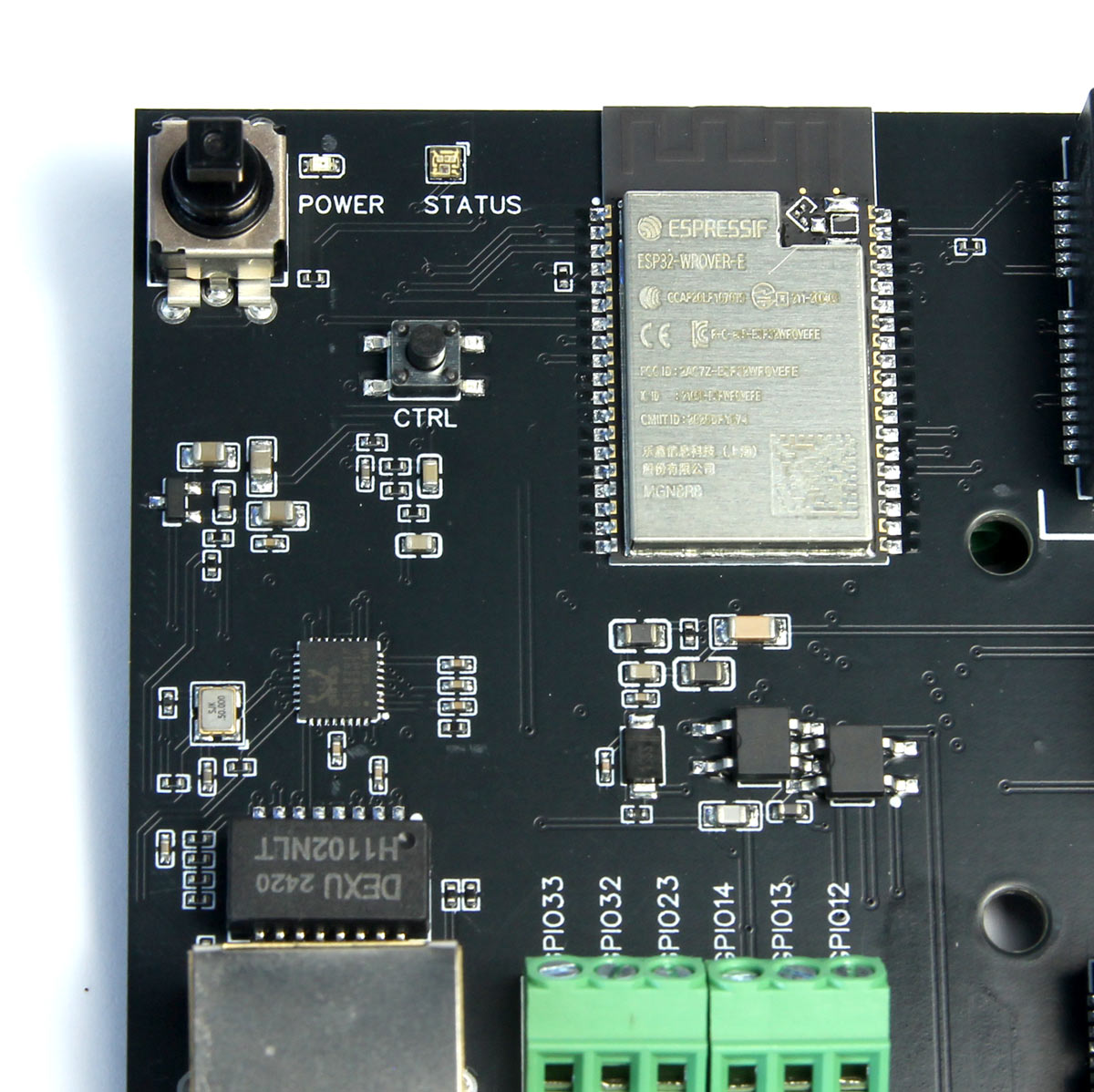
GPIO pins for custom integrations and advanced control.
Wire‑first PoE + UPS: a system that keeps working
PoE gives you power and data in a single cable—no wall‑warts, no random PSUs. Place your SIMO.io hub, router, and Game Changer boards behind a UPS. When power drops, your heating, lighting, security, blinds, and gates can keep running—no dark hallways, no frozen nights.
- Preferred path: PoE + Ethernet for maximum reliability.
- Fallback: 12 V DC power with Wi‑Fi networking where Ethernet isn’t possible.
- Grounding: land the board’s GND to building ground for surge protection and long‑term stability.
Modularity: clarity, serviceability, future‑proof
Consumer gear fails awkwardly: buried in a wall plate, forgotten IDs, weekends re‑pairing devices and re‑writing automations—often right after the 24‑month warranty. The Game Changer eliminates that chaos.
- All wiring, one place: SIMO.io logical centers keep I/O centralized. Most homes use 2–4 centers, preserving short wiring runs like standard electrical installs.
- DIN‑rail form factor: tidy, labeled, serviceable—professional by default.
- 3× I/O density: fewer enclosures and fewer points of failure than typical DIN systems.
- Swap, don’t rebuild: if a module fails, replace that module. No re‑pairing, no reprogramming—the function is bound to the port and the SIMO.io configuration, not a throwaway device ID.
- Board replacement in minutes: if the main board is damaged, replace it and move components to the new board in the SIMO.io app. The SIMO.io hub pushes the same config—no script rewrites.
I/O architecture that fits real projects
- 16 PCIe‑style I/O ports accept SIMO.io modules:
- Relay modules (switched loads)
- Dimmer modules (lighting zones)
- Binary sensor modules (dry contacts)
- IO1/IO2 as digital interfaces for DALI and I2C modules:
- DALI: addressable lighting with groups and scenes
- I2C: sensors and peripherals on a tidy digital bus
- GPIO pins for custom/embedded integrations.
Need more I/O? Add the extension module to unlock 22 more I/O ports—ideal for bigger homes or future expansions.
Typical builds (what it makes easy)
- Whole‑home lighting: relays + dimmers + DALI—coordinated by SIMO.io scenes and schedules.
- Access and exteriors: gates, doors, garages, shutters via relays; position/status via binary inputs.
- Sensors at scale: alarm zones, contact sensors, water/leak sensors, motion inputs—plus I2C for specialty sensing.
- Clean retrofits: use PoE wherever you can; 12 V DC + Wi‑Fi where Ethernet isn’t feasible.
Setup
Power and pair
- Power the board (PoE or 12 V DC). The LED flashes blue—Bluetooth onboarding is ready.
- Open the SIMO.io app → Colonels → select the waiting device → name it → choose LAN (PoE/Ethernet) or Wi‑Fi → Connect.
Grounding (recommended)
Land the board’s GND to building ground for surge protection and long‑term stability.
Add modules
Snap in modules, configure components in the SIMO.io app, and build scenes, schedules, and rules.
Built under SIMO.io Smart Home Supremacy
- The Game Changer serves SIMO.io with discipline. Pair once and manage everything in the SIMO.io app.
- For local control, advanced automation, and offline resilience, run a local SIMO.io hub (open source). Minimal setups can use a virtual SIMO.io smart home instance in the SIMO.io cloud (internet required).
Key specs (for confidence)
| Power and network | Preferred: Power over Ethernet (PoE) for power + data; Alternative: 12 V DC power with Wi‑Fi networking |
|---|---|
| I/O and buses | 16 PCIe‑style I/O ports (relay, dimmer, binary sensor modules); IO1/IO2 compatible with DALI and I2C modules; GPIO pins for custom integrations |
| Expansion | Extension connector adds 22 additional I/O ports (via extension module) |
| Installation | DIN‑rail mounting; recommended to connect board GND to building ground |
FAQs
Why PoE?
One cable for power + data, fewer points of failure, and UPS‑backed resilience. Keep your router, SIMO.io hub, and boards on a UPS for a home that keeps working during outages.
How do modules attach?
Snap SIMO.io modules into PCIe‑style ports. The SIMO.io app exposes them as components for control and automation.
What about DALI and I2C?
Use IO1/IO2 with the corresponding modules for addressable lighting (DALI) and for digital sensor/peripheral buses (I2C).
Can I expand later?
Yes. Add the extension module to unlock 22 more I/O ports—no rework of the existing panel.
What happens if a module fails?
Replace the module. The logic stays bound to the port—no re‑pairing or reprogramming.
What if the main board fails?
Replace the board and use the SIMO.io app to move components. The SIMO.io hub pushes the same configuration—no script rewrites.
Do I need a local SIMO.io hub?
For local control, advanced automation, and offline resilience—yes. Minimal cloud‑only setups can use a virtual SIMO.io smart home instance (internet required).
SIMO.io — Smart Home Supremacy. Quiet, protective, reliable, inevitable. The Game Changer is the disciplined main board that makes wired control elegant, modular, and ready for the long run.
Customer reviews
No reviews yet.
Related products

SIMO.io Test Kit

SIMO.io Hub — the local authority your smart home deserves
The Game Changer - Extener
Binary Input Module

AC/DC Sensor

Relay Module
DC Dimmer
AC Dimmer 230V
AC Dimmer 110V

0 - 10V Controller
I2C Interface
