


The Game Changer MINI — compact, pro‑grade control for remote spots


| Quantity | Discount | Unit price | |||
|---|---|---|---|---|---|
| 1 | -0% | $79.00 | |||
| 5+ | -13% | $69.00 | |||
| I need way more than that! | |||||
This product ships from European Union, beautiful country - Lithuania. Import duties might apply depending on your country. Price shown excludes VAT.
 CE marking
 Made in Europe
 Lithuania
- Enjoy free delivery for orders over $500.00!
- For orders below $500.00, a delivery fee of $20.00 - $50.00 applies.
- We deliver your orders with express courier services to ensure you get your products as soon as possible.
- All orders are shipped from EU, Lithuania.
General specs
- Connectivity: LAN, WiFi, Bluetooth
- Power: 100–240 V AC (onboard), PoE, 12 V DC
- IO Ports: 4
- Digital Interfaces: 2
- Mount: DIN Rail
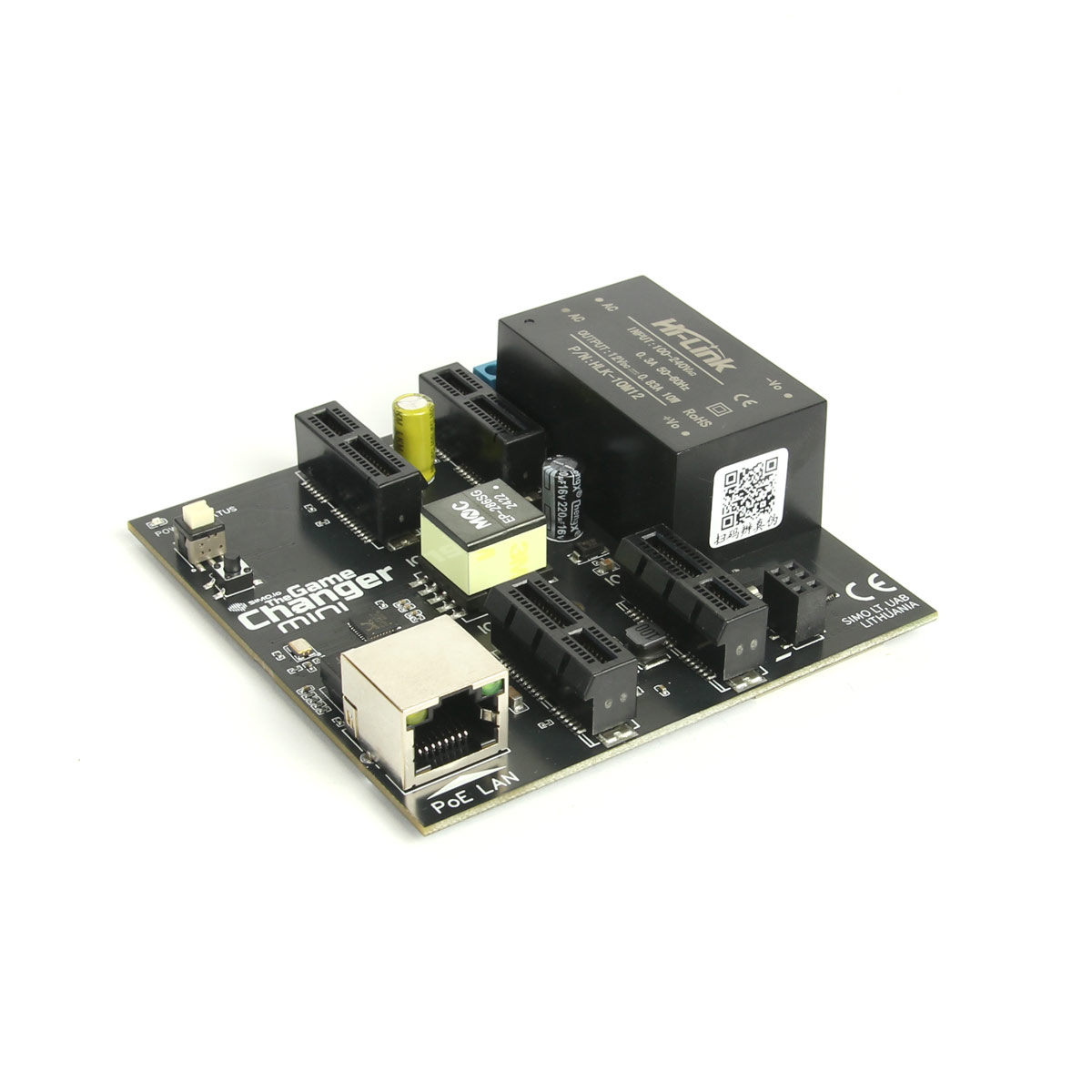
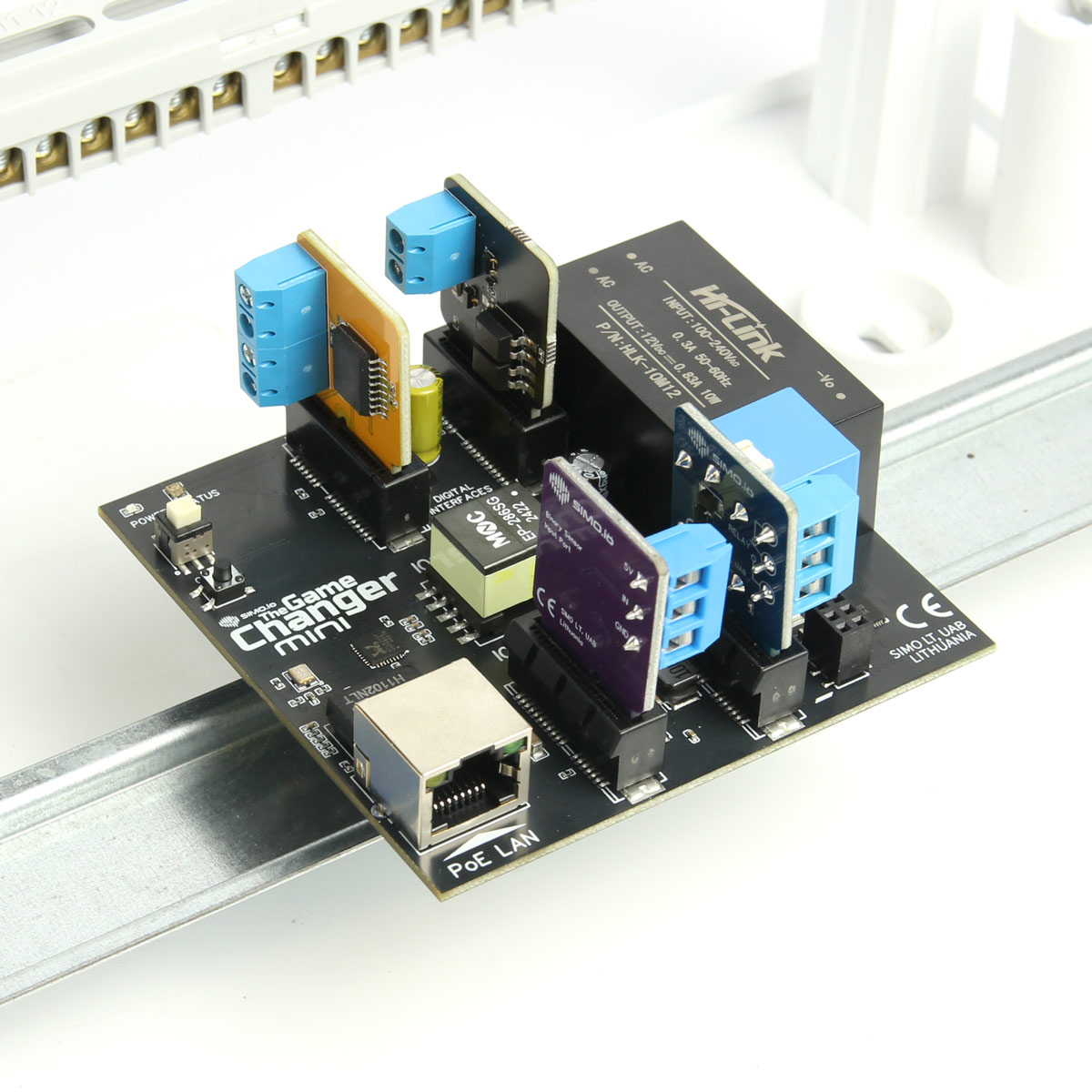
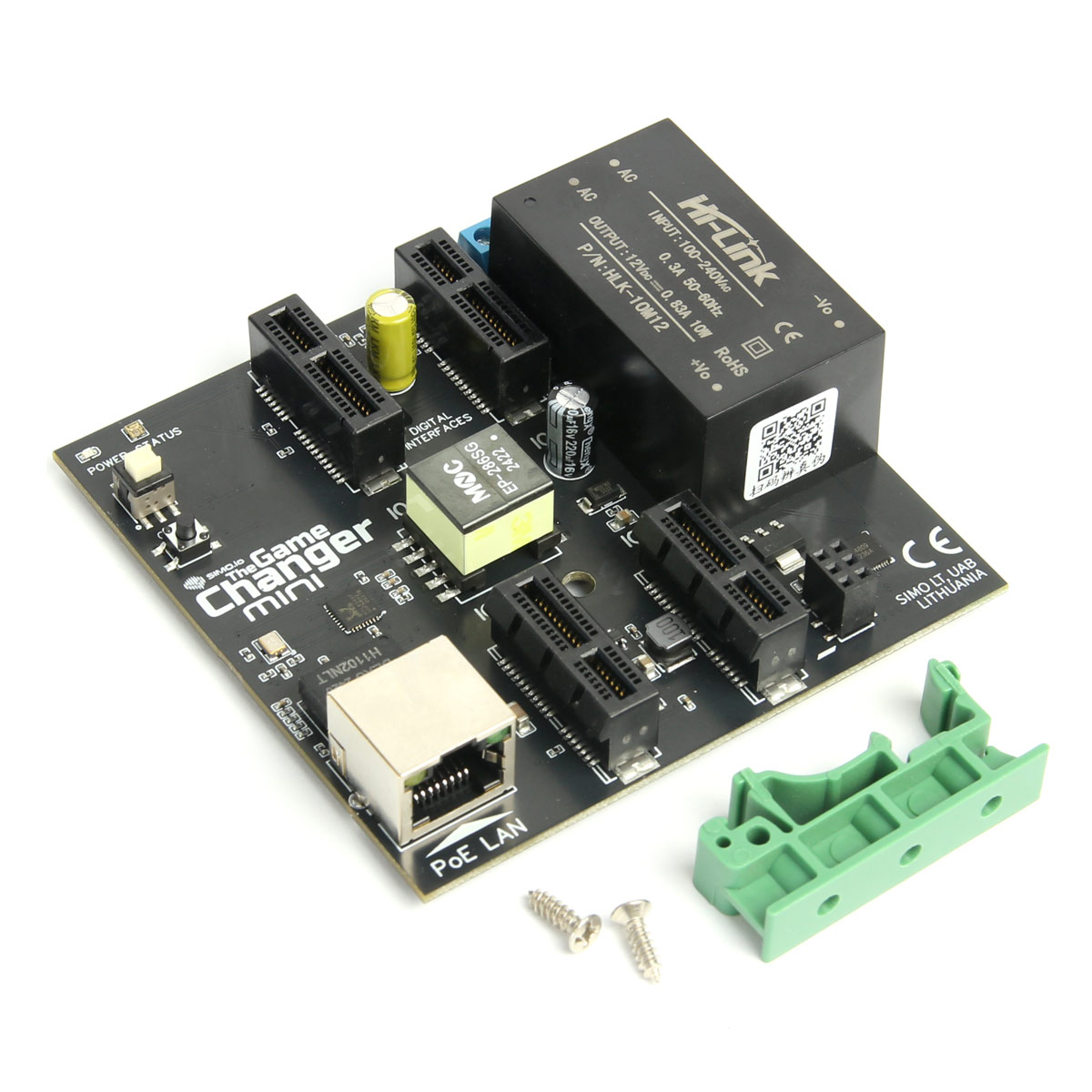
The Game Changer MINI commits to SIMO.io Smart Home Supremacy. It’s the compact, wire‑first controller for places the original plan didn’t cover—or where a small, disciplined node is all you need. Four modular I/O ports. Two digital interfaces. Onboard 100–240 V AC power (or PoE, or 12 V DC). Put intelligence exactly where it’s needed—calmly, reliably, without rework.
What you gain the moment the MINI powers on
- Remote control, solved: perfect for greenhouses, garages, gate pillars, pergolas, pool houses, attics, and remote rooms.
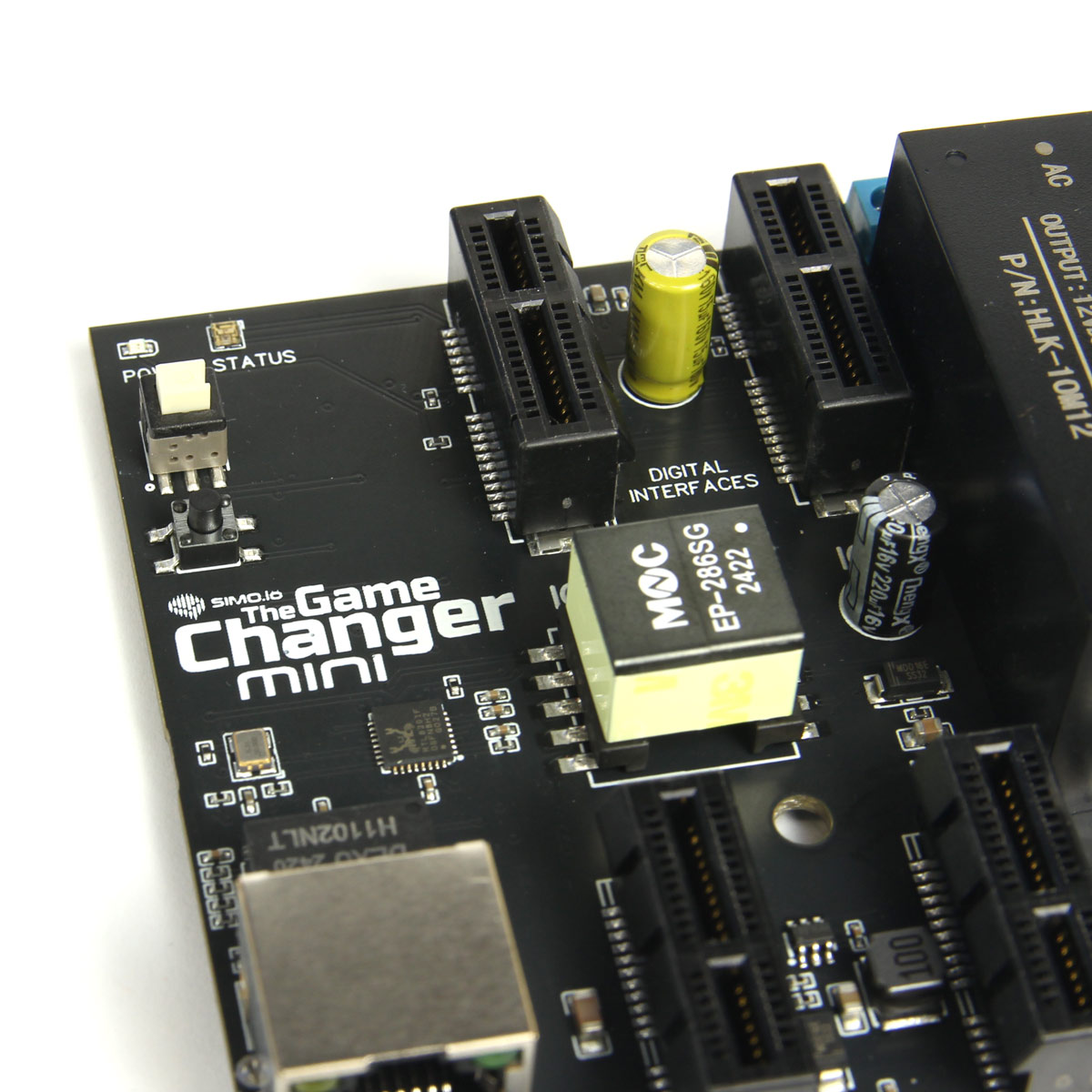
- Snap‑in modular control: 4 PCIe‑style ports for SIMO.io relays, dimmers, and binary sensors.
- Two digital interfaces on board: host a full DALI lighting line or a tidy I2C sensor bus.
- Flexible power: onboard 100–240 V AC, PoE over Ethernet, or 12 V DC—choose what the site gives you.
- Resilient by design: prefer Ethernet/PoE when present; otherwise power from mains and connect over Wi‑Fi for minimal, decisive installs.
- Service without rework: swap modules in seconds—no re‑pairing devices or rewriting automations.
Where the MINI shines
- Greenhouse: I2C temperature/soil sensors drive irrigation valves and fans; DALI for grow lights; relays for zone control.
- Gatehouse/driveway: relays for motor/strike, inputs for contacts, DALI for bollards or pathway lighting.
- Garage/workshop: door operators, task lights, extraction fans, leak sensors—tidy, centralized, serviceable.
- Pool house/pergola: pumps and lights via relays; environmental I2C sensors; a DALI line for architectural fixtures.
- Late adds/retrofits: where Ethernet wasn’t pulled, power from mains and connect via Wi‑Fi—no wall tearing, no messy PSUs.
Modular I/O and dual‑use digital ports
The MINI has four PCIe‑style I/O ports (IO1–IO4). IO1 and IO2 are dual‑purpose: they can host standard I/O modules or be reassigned as digital interfaces for DALI or I2C.
- When IO1 or IO2 is used as a digital interface (e.g., I2C on IO1), it is occupied by that bus. The remaining ports (e.g., IO2, IO3, IO4) are available for modules.
- Module options: relay modules (switched loads), dimmer modules (lighting), and binary sensor modules (dry contacts).
- Digital bus options: DALI module (addressable lighting with groups/scenes) or I2C module (multiple sensors on a tidy bus).
Power and networking (choose what the site gives you)
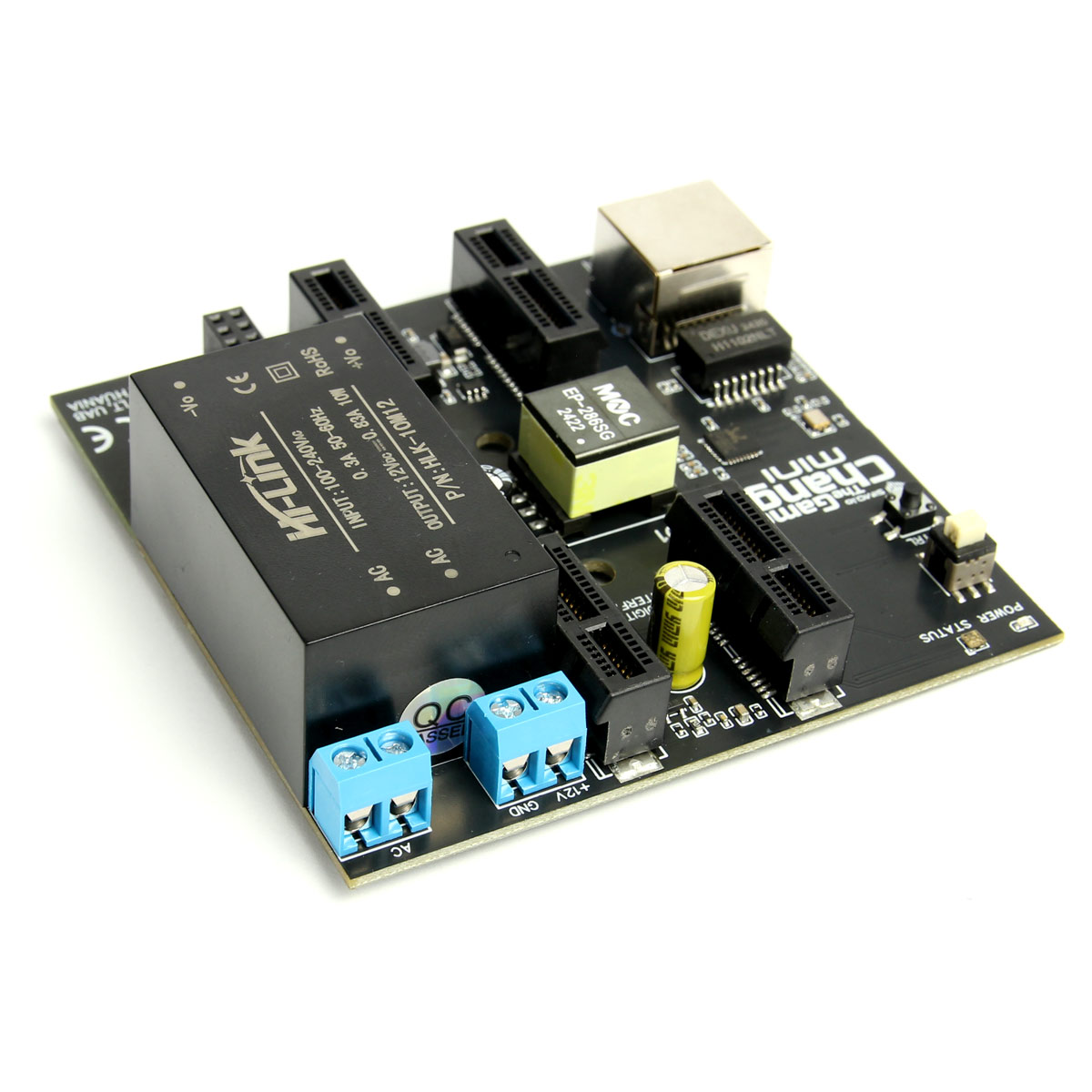
- Onboard mains: 100–240 V AC input lets you deploy a MINI in remote spots without external PSUs—minimal and decisive.
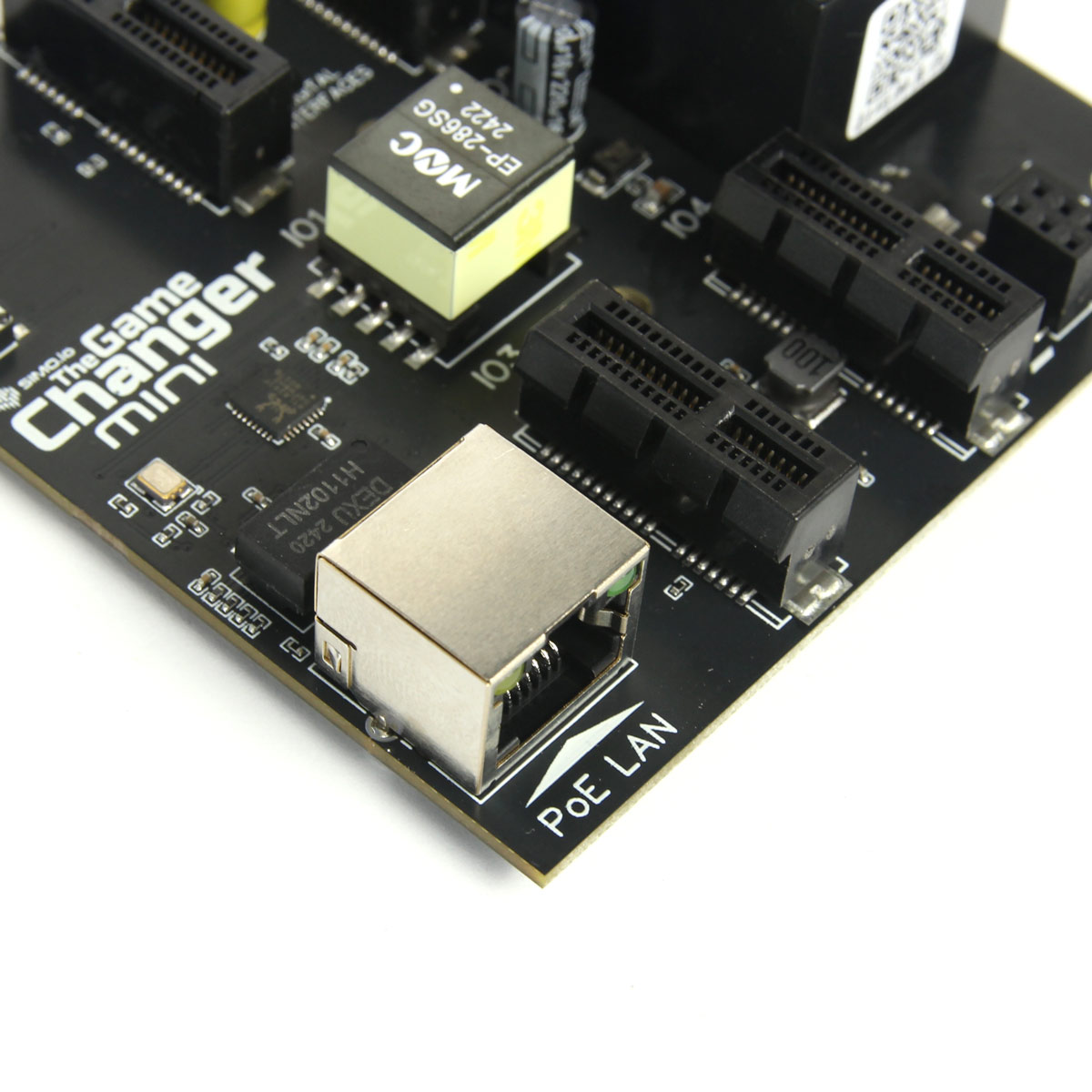
- Preferred when available: PoE over Ethernet for one‑cable power + data and UPS‑ready resilience.
- Alternative: 12 V DC input is supported if that’s the local standard.
- Networking: Ethernet (LAN) when you can pull it; Wi‑Fi where LAN is absent—this is the typical MINI scenario.
- Best practice: keep your SIMO.io hub and router on a UPS (back the PoE switch too, if used) so the system keeps working through outages.
Setup
- Mount the MINI on DIN rail at the edge location (greenhouse, garage, pump room, etc.).
- Power it via 100–240 V AC (onboard), PoE, or 12 V DC.
- On boot, the LED flashes blue—Bluetooth onboarding is ready.
- Open the SIMO.io app → Colonels → select the waiting device → name it → choose LAN (PoE/Ethernet) or Wi‑Fi → Connect.
- Snap in modules; assign IO1/IO2 as DALI or I2C if needed; build scenes and schedules in the SIMO.io app.
Built under SIMO.io Smart Home Supremacy
- The MINI serves SIMO.io with discipline. Pair once, manage centrally in the SIMO.io app.
- For local control, advanced automation, and offline resilience, run a local SIMO.io hub (open source). Minimal setups can use a virtual SIMO.io smart home instance in the SIMO.io cloud (internet required).
Specs (for confidence)
| I/O ports | 4 PCIe‑style ports (IO1–IO4). IO1 and IO2 can be reassigned as digital interfaces (DALI or I2C). |
|---|---|
| Digital interfaces | 2 (hosted on IO1 and IO2 when assigned): DALI (addressable lighting) or I2C (multi‑sensor bus). |
| Power options | 100–240 V AC (onboard); PoE over Ethernet (preferred when present); 12 V DC (alternative). |
| Networking | Ethernet (LAN) with PoE when available; Wi‑Fi for remote spots without LAN; Bluetooth for onboarding. |
| Expansion | No extension board support (by design); no general‑purpose GPIO pins. |
| Installation | DIN‑rail friendly form factor; follow local electrical code for mains connections. |
FAQs
Do I need Ethernet?
If LAN is present, PoE over Ethernet is preferred for one‑cable power + data and UPS resilience. The MINI is designed for places where LAN often isn’t available—power it from 100–240 V AC (onboard) and connect via Wi‑Fi for a minimal, decisive install.
How do IO1 and IO2 work as digital interfaces?
IO1/IO2 can be reassigned to host a DALI or I2C module. When a port is used as a digital interface, it is occupied by that bus, leaving the other ports for standard I/O modules.
Can I expand the MINI later?
The MINI doesn’t support an extension board. If you need more I/O in that location, add another MINI or use The Game Changer main board with an Extender.
What if a module or the MINI fails?
Replace a failed module and move on—no re‑pairing or reprogramming. If the MINI is damaged, install a replacement and use the SIMO.io app to move components; your SIMO.io hub pushes the same configuration.
Does it work offline?
Yes. With a local SIMO.io hub, automations and control run locally. Internet is only required for cloud‑only features or virtual instances.
SIMO.io — Smart Home Supremacy. Quiet, protective, reliable, inevitable. The Game Changer MINI is the disciplined remote node that puts control exactly where it belongs.
Customer reviews
No reviews yet.
Related products

SIMO.io Test Kit

SIMO.io Hub — the local authority your smart home deserves
Binary Input Module

Relay Module
DC Dimmer
AC Dimmer 230V
AC Dimmer 110V

0 - 10V Controller
I2C Interface
